

The 6 Best Options for Loans for Bad Credit in 2026
Last updated: 2026-11-25
Trying to fix your finances when your credit score is in the gutter feels like walking through a thick fog. You might feel stuck in a loop, facing constant rejections and sky-high interest rates. This guide helps you find a lifeline without falling into the predatory traps that often hide in the shadows of the lending industry.
Picking a lender involves more than just glancing at a headline interest rate. You have to weigh how fast you get the money against what it actually costs you in the long run. It is vital to read the fine print to ensure the terms match your ability to pay. A low monthly payment sounds great, but stretching a loan over five years might result in paying double the original principal in interest.
Always compare the Annual Percentage Rate (APR). This number is the most honest metric because it includes both the interest and any mandatory fees required to secure the loan. If you only look at the interest rate, you might get a nasty surprise when the final bill arrives.
- Credit Union West
- FastLendGo
- Lower
- Best Egg
- Kashable
- PennyLime
How These Lending Options Were Evaluated
We looked for accessibility and how these companies handle people with less-than-perfect credit. Traditional benchmarks often leave people in need behind, so we shifted our focus to how these lenders treat non-traditional income. We prioritized how fast you get your funds and how transparent the companies are about their terms.
Every provider went through a scrutiny process to see if they offer real support during financial transitions. We checked for specific products like disaster relief, gig worker advances, or workplace wellness programs. The goal was to find lenders offering real paths to stability rather than expensive fixes that just create more debt.
We also looked at the “barrier to entry” for each provider. We asked if a lender requires a high FICO score or if they will look at alternative data, such as utility payments or bank statements, to verify your income. This helps determine if they are actually accessible to the people who need them most.
To ensure a comprehensive view, we analyzed several key dimensions:
- Accessibility: How easy is the application process for someone with a low score?
- Transparency: Are the terms clearly stated, or are there hidden “origination fees” tucked away in the fine print?
- Specialization: Does the lender serve a niche (like gig workers or homeowners) or a general population?
- Reputation: What are the consumer feedback trends regarding collection practices and customer service?
| Lender Name | Max Loan Amount | Best For | Key Feature |
|---|---|---|---|
| Credit Union West | See site | Disaster Relief | 0% Interest Relief Loans |
| FastLendGo | See site | Quick Access | Multiple State Availability |
| Lower | See site | Mortgage/Home Equity | No Lender Fees for Life |
| Best Egg | $50,000 | Debt Consolidation | A+ BBB Rating |
| Kashable | See site | Employee Wellness | Workplace Integration |
| PennyLime | $10,000 | Gig Workers | Uses Bank Deposits |
Top Rated Lenders for Challenging Credit Profiles
1. Credit Union West
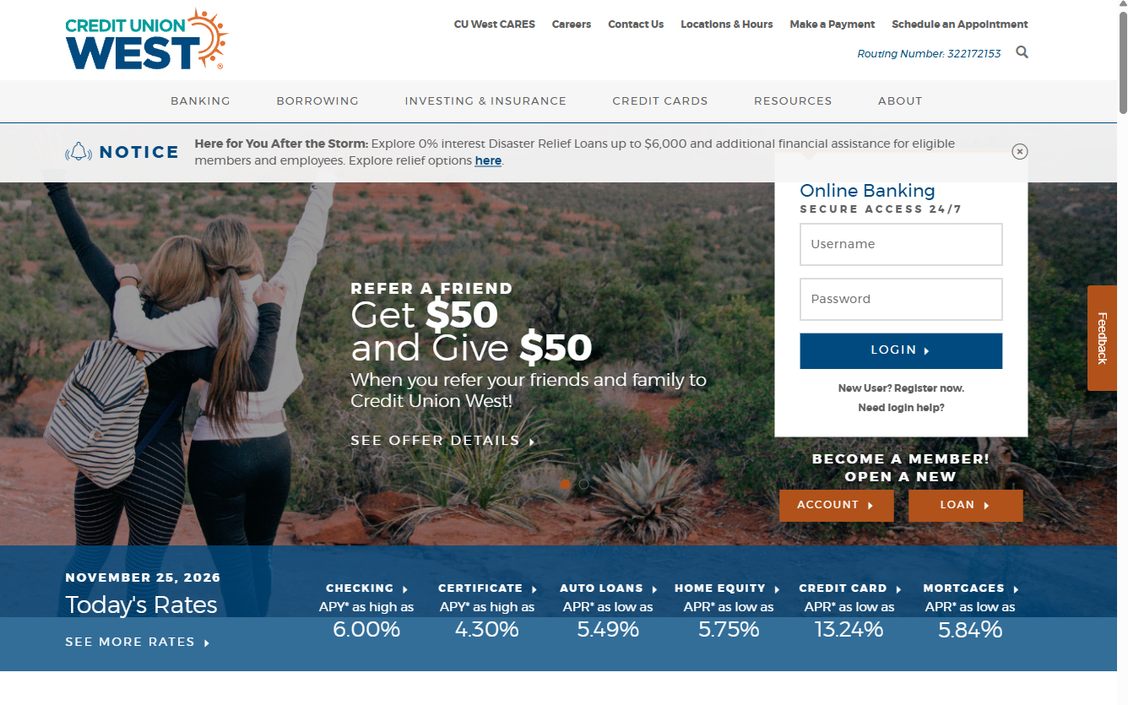
This institution focuses on community, particularly when life throws a curveball your way. They offer specialized assistance that goes beyond standard personal loans, focusing on member welfare during difficult times. Large national banks often use automated algorithms to instantly deny anyone with a credit dip, but Credit Union West prioritizes the human element.
For those facing unexpected natural disasters, they provide significant relief. It is rare to find a lender offering 0% interest options to help people get back on their feet after a storm. This type of relief prevents a temporary crisis from turning into a long-term cycle of insolvency. If you are a member, the path to assistance is often much shorter than a traditional application.
Pros:
- 0% interest disaster relief loans up to $6,000
- Available financial assistance for members and employees
- Strong local presence in Arizona
Cons:
- Membership requirements apply
2. FastLendGo
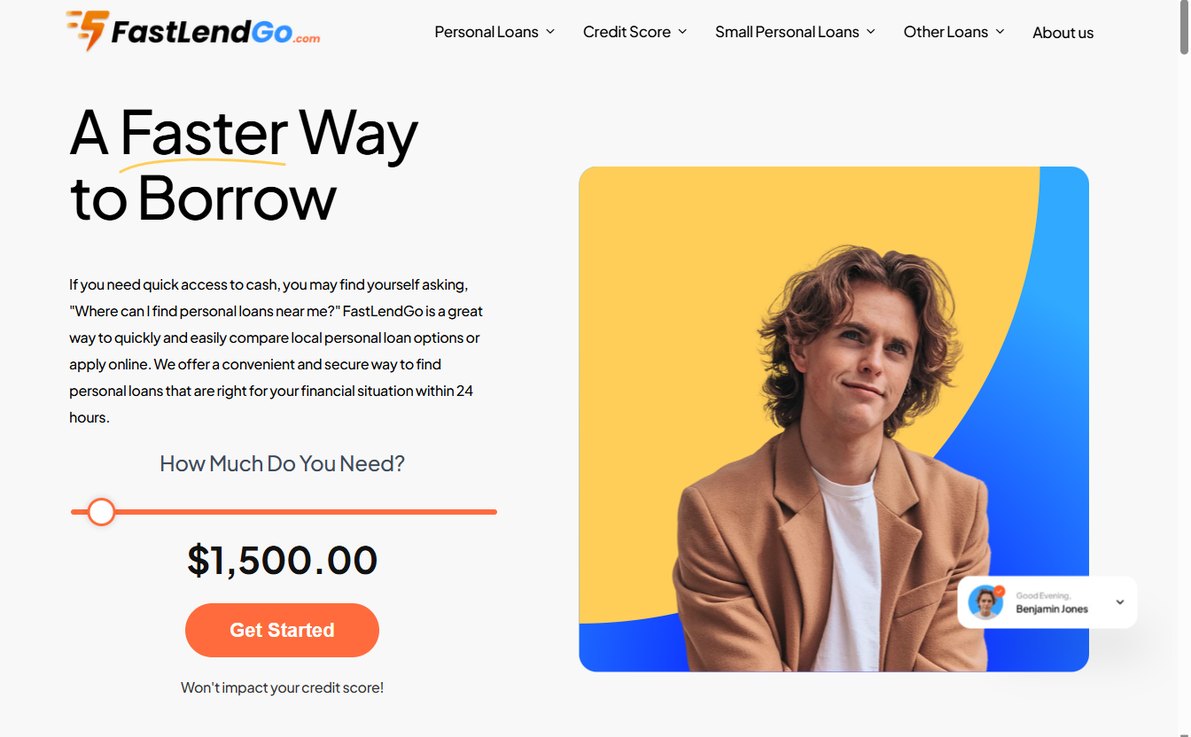
When you are staring at an empty bank account and a looming car repair bill, every minute feels like an hour. FastLendGo understands that sense of urgency. They provide a way to compare various loan options quickly, making them a good fit for “bridge” scenarios. This is for when you have the income to pay back a loan but lack the liquid cash right now.
They cater to a wide variety of needs, from small $500 emergency cash injections to larger sums for significant life events. Their flexibility makes them a versatile tool for those with varying credit tiers. Because they facilitate comparison, you aren’t locked into a single lender’s rigid terms. You can see which provider offers the most reasonable rate for your specific credit profile.
Pros:
- Covers a wide range of loan amounts from $500 to $5,000+
- Options for various credit scores including bad credit
- Covers many states including CA, TX, and FL
Cons:
- High-speed borrowing can lead to high interest costs
3. Lower
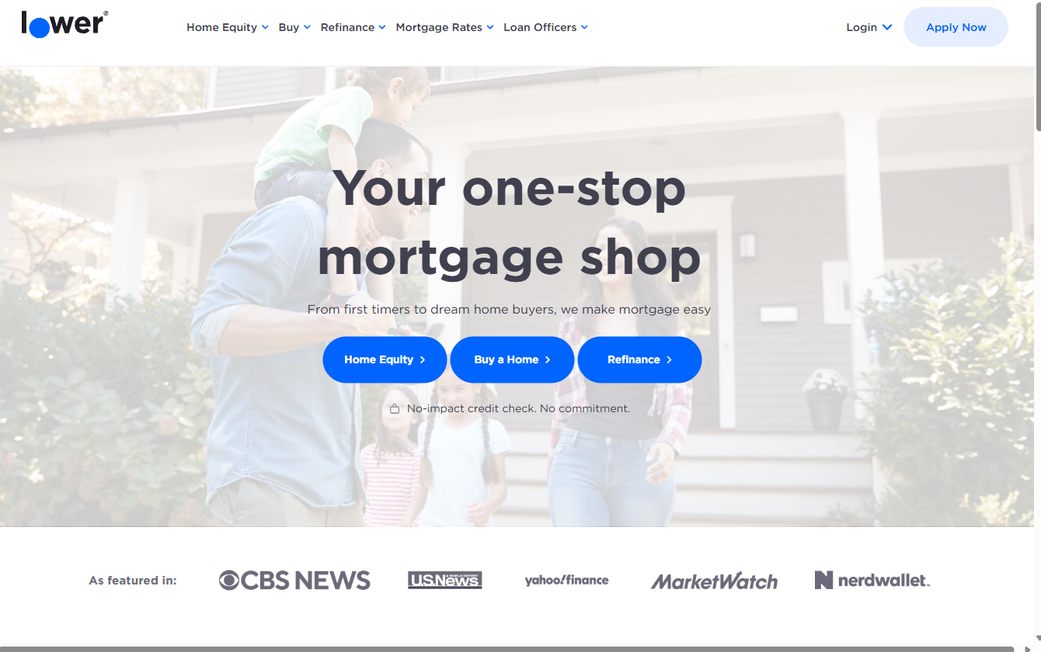
If your credit struggles are tied to your home, this provider offers a different perspective on mortgage and home equity. They aim to strip away the complexity that usually accompanies real estate financing. Many homeowners find themselves equity rich but cash poor, unable to tap into their home’s value due to massive paperwork and high closing costs.
The philosophy here is to reduce the barriers that keep people from owning a home. By using smart technology to keep costs down, they attempt to pass those savings directly to you. Their digital-first approach means you can often get a clearer picture of your options without spending days sitting in a physical bank branch.
Pros:
- No lender fees for life after the first loan
- No-impact credit checks for initial quotes
- Dedicated mortgage experts available 7 days a week
Cons:
- Primarily focused on real estate rather than personal cash
4. Best Egg
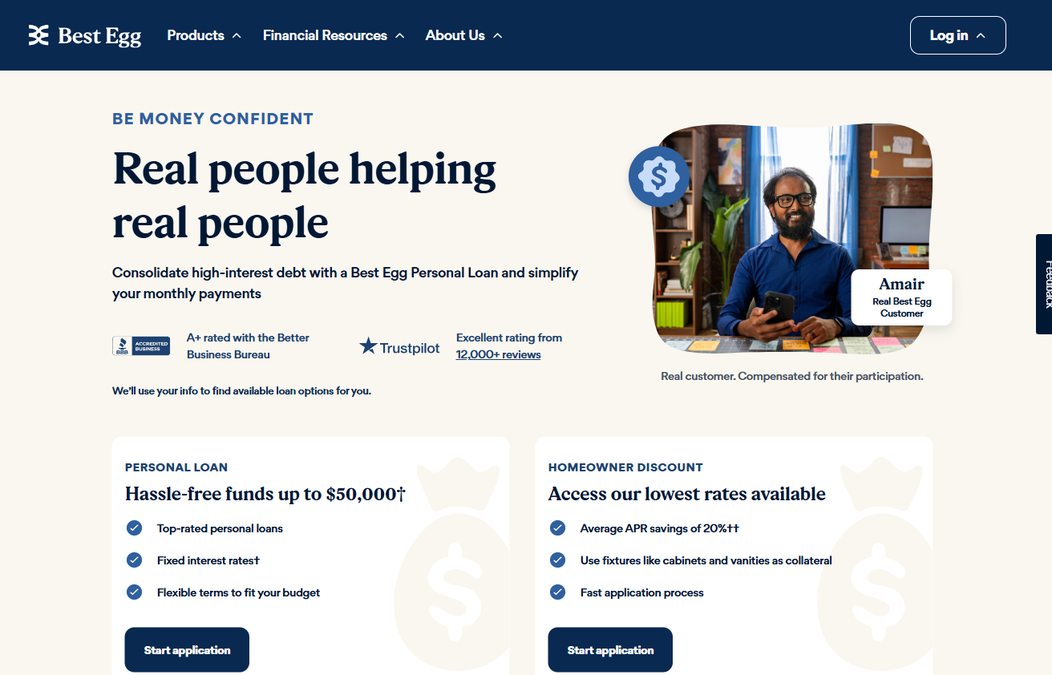
For those drowning in a sea of high-interest credit card debt, Best Egg offers a way to simplify the chaos. They specialize in consolidating multiple payments into one manageable monthly installment. Instead of managing five different due dates with varying interest rates, you consolidate that debt into a single, fixed-rate personal loan.
They maintain an impressive reputation with an A+ rating from the Better Business Bureau. This is a solid choice if you want to use home fixtures as collateral to secure better rates, or if you simply need a predictable repayment schedule. By moving from variable-rate credit cards to a fixed-rate loan, you protect yourself from sudden market fluctuations that could increase your monthly debt burden.
Pros:
- High loan amounts up to $50,000
- Possibility to save 20% on average APR
- Fixed interest rates for predictable budgeting
Cons:
- Requires a more structured application process
5. Kashable
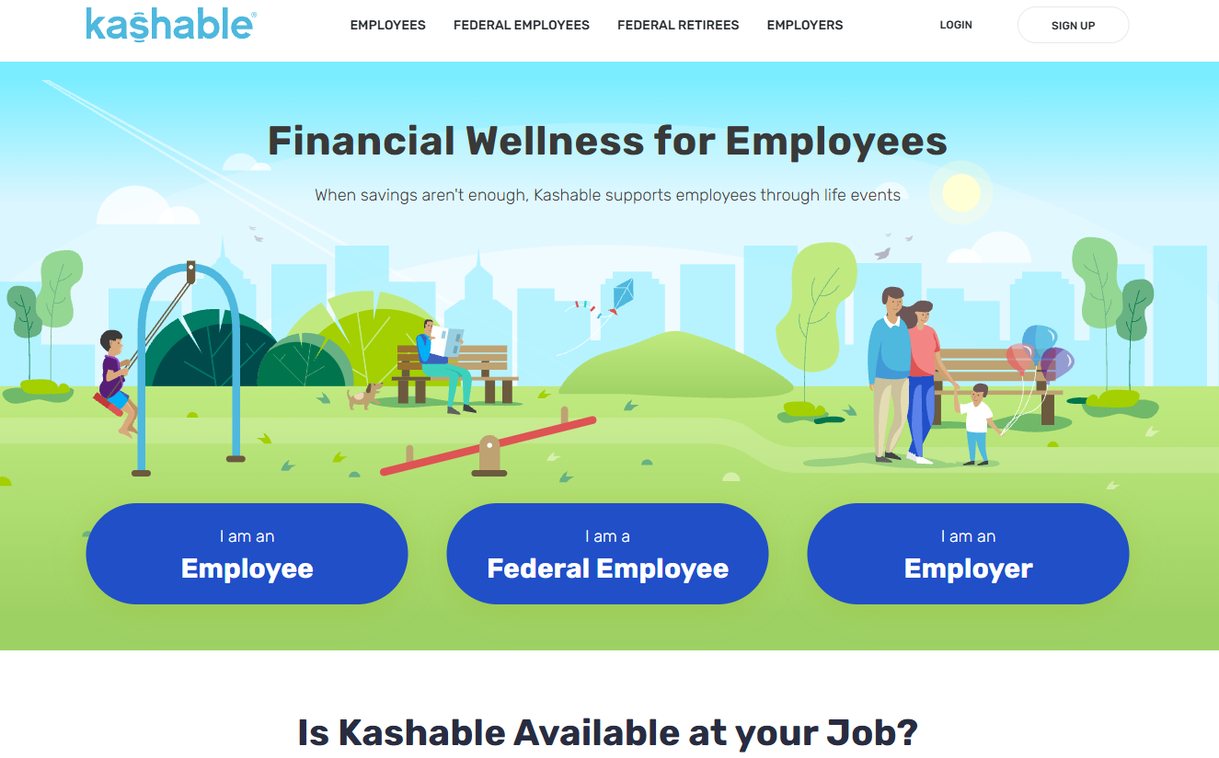
Kashable operates through a unique model by integrating directly with employer benefits. This means the lender is often a part of your professional ecosystem, making the financial relationship feel more integrated. This model is particularly beneficial for employees who have a steady income but a low credit score due to past mistakes or medical debt.
They focus heavily on financial wellness, aiming to support employees through unexpected expenses. It is an excellent option if your company has partnered with their platform to offer workplace benefits. Because the lender can see your employment status, the underwriting process is often smoother and more aligned with your actual cash flow.
Pros:
- Direct integration with payroll systems
- Focuses on long-term financial wellness
- Available through many HR platforms
Cons:
- Availability is strictly dependent on your employer
6. PennyLime
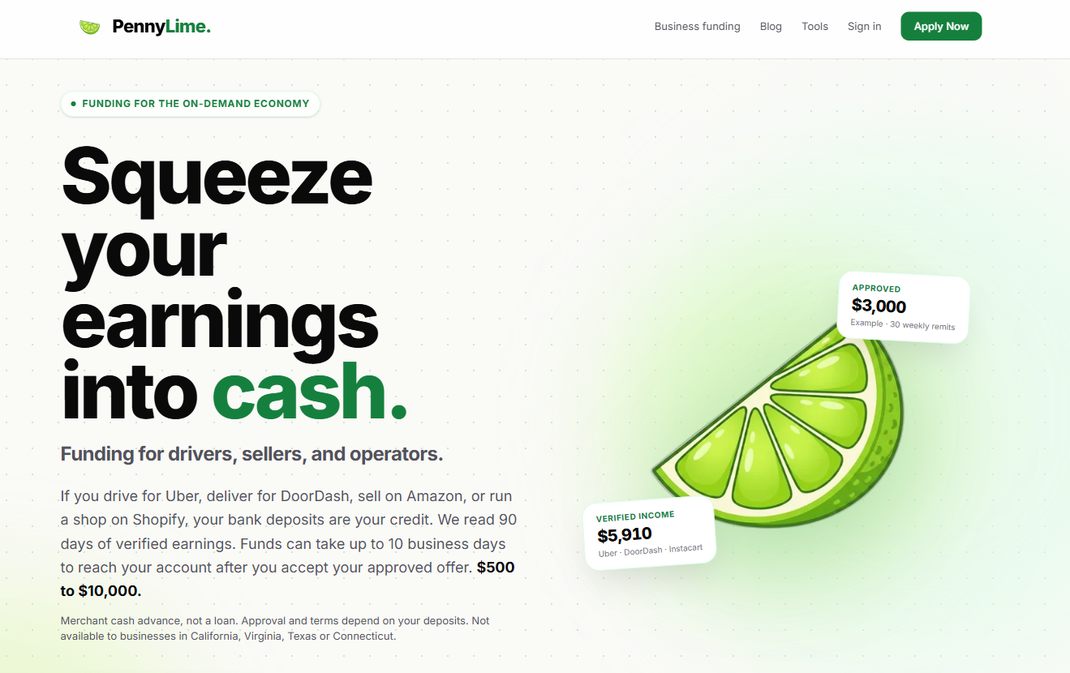
Gig workers live in a world of fluctuating income, which often makes traditional banks very uncomfortable. PennyLime solves this by looking at your actual work history rather than just a credit score. Traditional banks want to see a consistent, predictable paycheck every two weeks. PennyLime understands that a freelancer might have a massive week followed by a slow week.
If you drive for Uber or sell on Amazon, your recent earnings are your greatest asset. They turn those bank deposits into a way to access cash advances to bridge the gap between paydays. This is not a traditional loan with a set repayment date months in the future; rather, it is a tool for managing the immediate ebb and flow of the on-demand economy.
Pros:
- Funding amounts from $500 to $10,000
- Uses 90 days of verified earnings to determine eligibility
- Designed specifically for the on-demand economy
Cons:
- Not a traditional loan; it is a merchant cash advance
- Not available in CA, VA, TX, or CT
Understanding the Real Cost of Borrowing
Before you sign any agreement, you must understand the difference between a loan and a cash advance. As seen with PennyLime, a cash advance might not be a loan in the traditional sense. A traditional loan is a set amount of money you pay back over a fixed period with a set interest rate. A merchant cash advance is often a purchase of your future receivables.
This means the lender takes a percentage of your future sales rather than a fixed monthly payment. While this can be easier for a business with fluctuating revenue, it can also become extremely expensive if your sales drop. The lender’s cut is taken regardless of how much you made that week, which can create a heavy burden when business is slow.
To calculate the true cost of any borrowing, follow these three steps:
- Identify the Total Repayment Amount: Look at your monthly payment and multiply it by the total number of months in the term. Add any upfront “origination fees” to this number.
- Subtract the Principal: Subtract the actual amount of money you received from the total repayment amount. The resulting number is exactly how much the lender is charging you for the privilege of using their money.
- Check the APR: Always ask for the Annual Percentage Rate. If a lender only gives you the “monthly interest rate,” they are often trying to hide the true cost. A 5% monthly interest rate might sound small, but that is actually 60% interest per year due to compounding.
Strategies for Improving Your Credit While Managing Debt
Securing a loan is a temporary fix; improving your credit is a permanent solution. If you are currently using high-interest loans to bridge gaps, you are in a “defensive” financial posture. To move into an “offensive” posture, you need to use the stability provided by these loans to rebuild your score. Here is a step-by-step approach to leveraging your current situation for future growth:
| Step | Action | Expected Impact |
|---|---|---|
| 1. Consolidation | Use a low-interest loan (like Best Egg) to pay off high-interest credit cards. | Reduces interest expense and improves “Credit Utilization” ratio. |
| 2. Automation | Set up automatic payments for all new loans and existing bills. | Ensures no “late payments,” which are the single biggest factor in your score. |
| 3. Monitoring | Use a free tool to check your credit report for errors every 90 days. | Prevents identity theft and ensures inaccuracies don’t drag your score down. |
| 4. Micro-Payments | If using gig-work advances (like PennyLime), pay them back faster than required. | Builds a history of reliable, high-frequency repayment. |
Another mistake is ignoring the total cost of borrowing. A lender like Credit Union West might offer 0% interest for specific relief, which is a dream, but most other lenders will charge significant interest. Always calculate the total amount you will have paid back by the end of the term, not just the monthly payment. This comparison is what separates those who use debt to build wealth and those who use debt to build a cycle of poverty.
Finally, do not rush into a decision just because you are in a pinch. While FastLendGo or Best Egg might offer the speed you crave, the pressure of an emergency can cloud your judgment. Take a deep breath, compare the options provided in this list, and choose the one that fits your specific life situation best. The goal is not just to get through today, but to ensure that tomorrow is even more stable than today.
 2025 Copyright Office on the Hill Ltd |

